
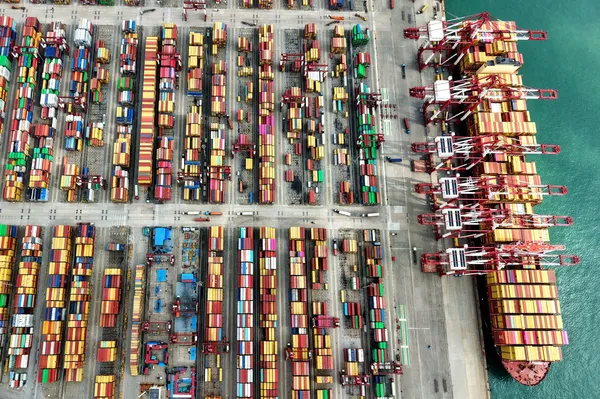
The Trump administration's imposition of a 10% tariff on $200 billion of Chinese imports has taken effect, marking a significant escalation in the trade war between the world's two largest economies. This article will analyze the potential impact of this new levy on various sectors and stakeholders, from the average American consumer to international investors and small business owners.
The tariff increase comes as the U.S. rebuilds its tariff wall, a move that could have far-reaching consequences for global trade dynamics, economic growth, and geopolitical relationships. It also represents a departure from the free-trade policies that have dominated global economics for the past several decades.
For American consumers, the immediate impact of the tariff hike will be higher prices on a wide range of goods. This is because many of the products targeted by the 10% levy are consumer goods, including furniture, electronics, and food. However, the indirect effects of the tariff hike could be even more significant. These include potential job losses in industries that rely on imported Chinese goods, as well as higher inflation rates.
For international investors, the new tariff could create both risks and opportunities. On one hand, the levy could lead to increased market volatility, as investors grapple with the uncertainty surrounding the future of U.S.-China trade relations. On the other hand, the tariff could create opportunities for investors who are willing to bet on certain sectors or companies that stand to benefit from the trade war. For instance, domestic manufacturers that compete with Chinese imports could see their profits rise as a result of the tariff.
For small business owners, the impact of the tariff hike will depend largely on the nature of their business. Those that rely heavily on imported Chinese goods will likely face higher costs, which could squeeze profit margins. However, businesses that are able to pass these costs onto consumers may be able to weather the storm. Additionally, businesses that compete with Chinese imports could benefit from the tariff, as it could make their products more competitive.
In conclusion, the Trump administration's 10% levy on Chinese imports represents a significant escalation in the U.S.-China trade war. The impact of this tariff hike will be felt by a wide range of stakeholders, from the average American consumer to international investors and small business owners. While the immediate effects of the levy will be higher prices for many goods, the longer-term consequences could be far-reaching, affecting everything from job growth to inflation rates.
 Next
Next









Comments (0)
Leave a comment